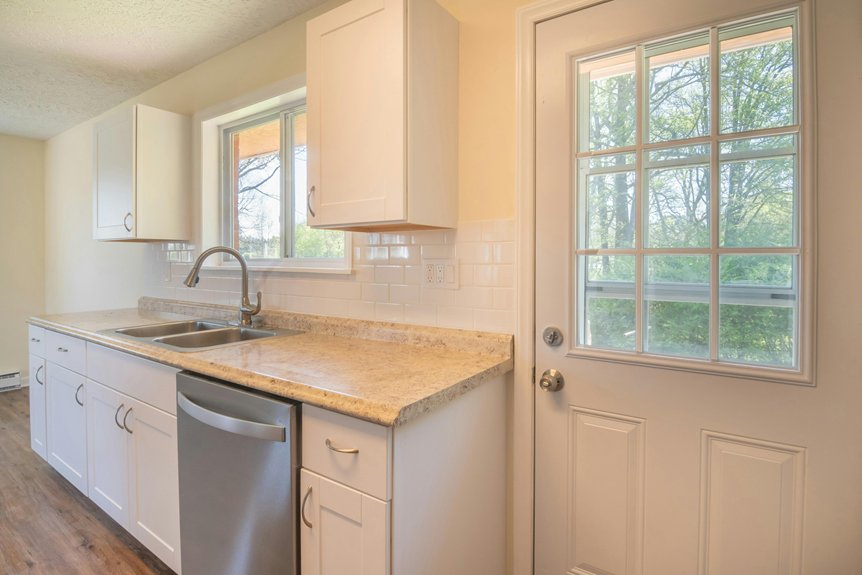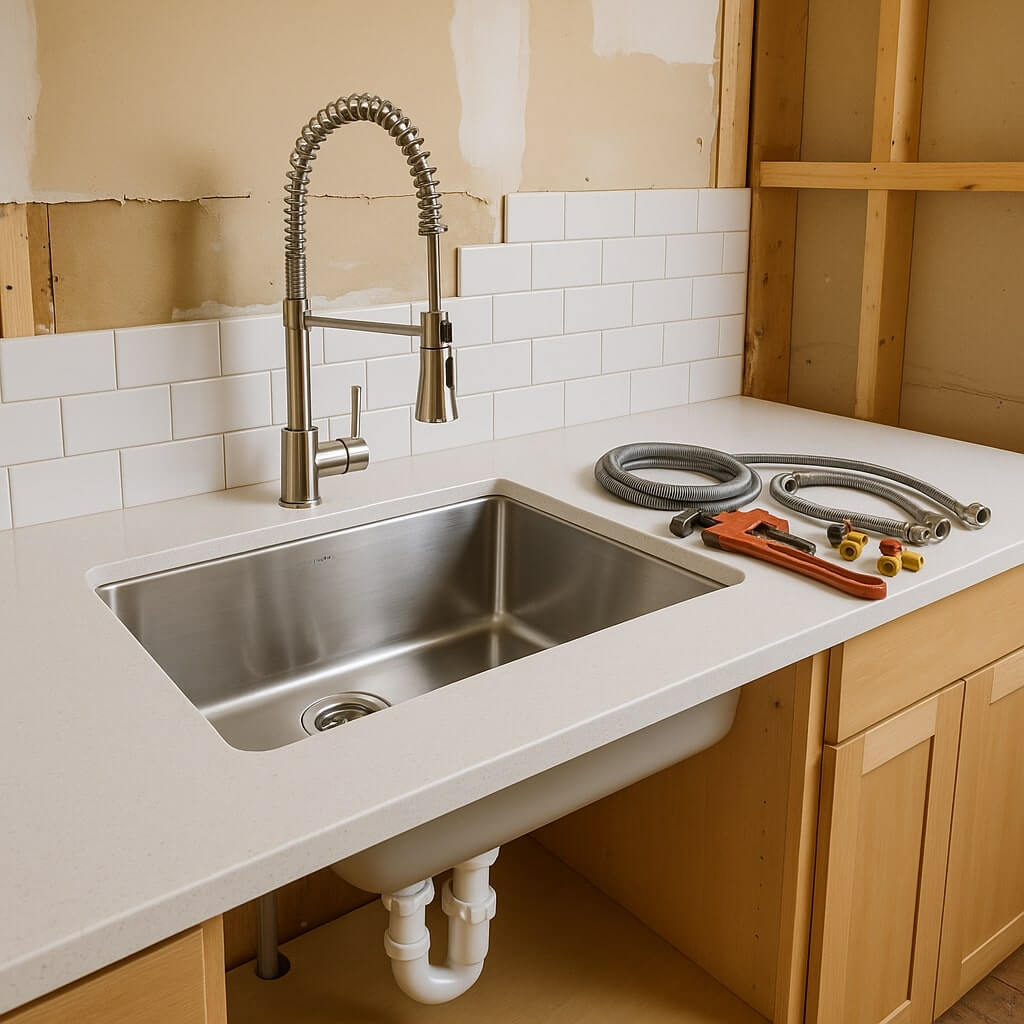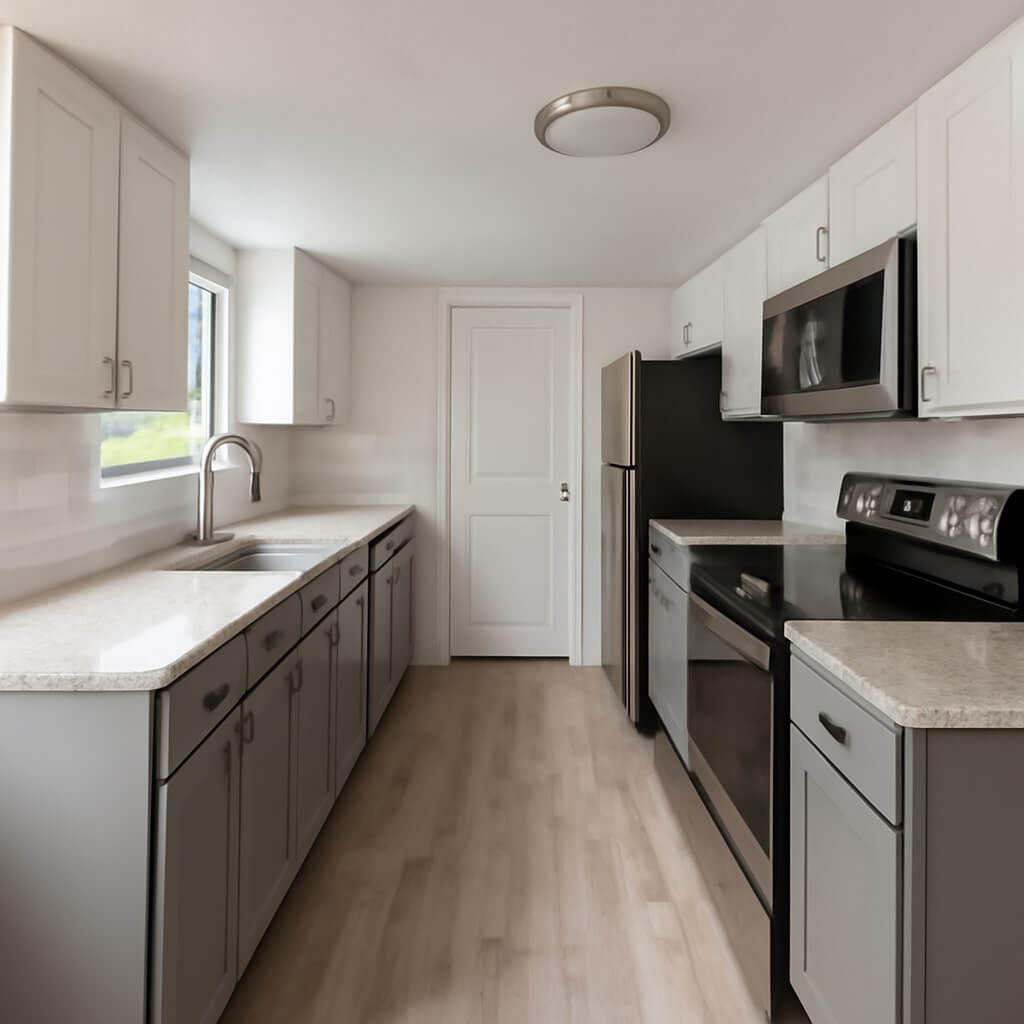

If you’re considering a kitchen remodel in your split-level home, you’ll want to approach it methodically. Start by evaluating your current kitchen layout and identifying what works and what doesn’t. Then, think about the materials and finishes that will enhance both style and durability. Finally, consider how you can optimize functionality and flow in the space. Each step is vital, and understanding them can transform your kitchen into an efficient and beautiful hub of your home.
Key Takeaways
- Assess the existing layout to identify functional challenges and opportunities for improving flow and efficiency in your split-level kitchen.
- Choose durable materials for cabinetry, countertops, and flooring that complement your kitchen’s style while ensuring longevity.
- Plan the kitchen triangle effectively by positioning the sink, stove, and refrigerator for optimal movement during meal preparation.
- Enhance the kitchen’s aesthetic with a cohesive color scheme and thoughtful lighting that balances style and functionality.
- Finalize design decisions by reviewing selections with family input, ensuring alignment with lifestyle needs and overall kitchen flow.
Evaluate Your Current Kitchen Layout and Needs
Before diving into your kitchen remodel, it’s essential to evaluate your current layout and needs.
Start with a thorough layout assessment of your current kitchen. Identify what works and what doesn’t—think about the flow, storage, and usability. Are the appliances conveniently placed? Is there enough counter space for meal prep?
Consider how often you entertain or cook, as these factors influence your design. Take notes on any pain points or areas for improvement.
This evaluation will guide your decisions and guarantee the remodel meets your lifestyle and preferences, ultimately creating a functional and enjoyable space.
Select Materials and Finishes
As you commence selecting materials and finishes for your kitchen remodel, it’s essential to contemplate both aesthetics and functionality.
Prioritize material durability to guarantee your investment lasts. Consider how different finish styles can elevate your space while maintaining practicality.
Emphasize durability in your material choices to ensure longevity while enhancing your kitchen’s aesthetic appeal.
- Cabinetry: Choose between wood, laminate, or metal for durability and style.
- Countertops: Explore options like granite, quartz, or butcher block based on maintenance and appearance.
- Flooring: Select tile, hardwood, or vinyl for a balance of resilience and design.
- Backsplash: Opt for glass, ceramic, or stone to add character and ease of cleaning.
Make your selections wisely!
Plan for Functionality and Flow
Selecting the right materials and finishes sets the stage for a kitchen that not only looks good but also works well.
To enhance functionality and flow, focus on the kitchen triangle—your sink, stove, and refrigerator should be positioned for efficient movement. This layout minimizes unnecessary steps while cooking.
Additionally, incorporate smart storage solutions, like pull-out shelves and vertical cabinets, to maximize space and keep essentials organized.
Make sure your workflow is seamless by choosing a layout that encourages ease of movement and access.
With careful planning, your split-level kitchen can be both beautiful and highly functional.
Conclusion
By following these three essential steps—evaluating your current layout, selecting the right materials, and planning for functionality—you’ll create a kitchen that not only looks great but works seamlessly for your lifestyle. Take the time to reflect on your needs and preferences, and don’t hesitate to make adjustments along the way. With thoughtful planning, your split-level kitchen remodel can transform into an inviting, efficient space where you love to cook and gather.